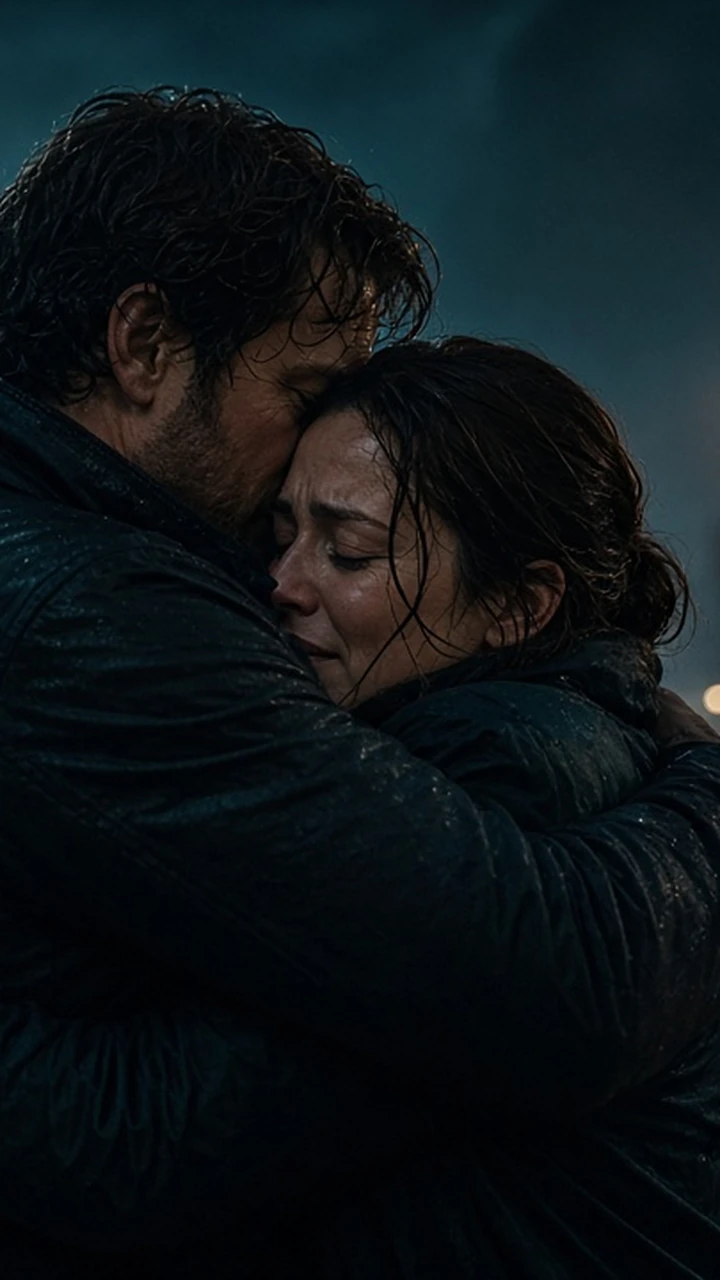
Zombie love story Runway
To make a zombie love story clip with Runway, generate matching cold and warm scene stills, animate each beat with image-to-video from a first frame, then edit the ruined world, an unfired gun, a hug, and a warm-memory match cut into one vertical story.
Choose image-to-video before writing the prompt
The goal is a short fictional romance with four readable beats: a ruined world, a survivor who refuses to fire, an embrace, and a warm memory of the same couple. Our suggested final timeline is twelve seconds, vertical 9:16. Those are creative targets for this edit, not a claim that every Runway model generates that duration in one attempt.
Runway (often searched as RunwayML) publishes two video jobs for Gen-4.5 (`gen4.5`). Image-to-video requires a first-frame image (`promptImage`, position `first`). Text-to-video takes text only. Gen-4 Turbo (`gen4_turbo`) is documented on image-to-video with a first frame; it is not listed on text-to-video. Both models accept an integer duration from 2 to 10 seconds. Image-to-video Gen-4.5 lists ratios including `720:1280`. Use the controls shown for the model you selected.
Prepare a cold scene and a warm scene with matching framing, then animate them separately. Keep the change of world for your editing timeline. Two portraits are character references, not a first frame: sending one face as the opening frame of a two-person shot asks the model to invent a couple the still does not contain.
Prepare the couple and the matching stills
Use adult subjects who agreed to this fictional treatment. Pick images where the eyes, jaw, and hair are readable, with similar camera heights. Assign A as the survivor and B as the infected beloved. Write those roles down so a jacket change does not silently swap them. Our photo guide covers reference selection in more detail.
Runway's Gen-4 Image model (`gen4_image`) accepts up to three reference images, each with an optional tag you can @-mention in the prompt. Gen-4 Image Turbo (`gen4_image_turbo`) requires one to three references. Both list vertical ratios including `720:1280` and `1080:1920`. Tag the two portraits, then generate four stills at one shared vertical ratio: a cold two-shot, a refusal pose, a cold embrace, and a matching warm embrace. Put A left and B right, with pale tired skin on B rather than wounds.
Before spending a video generation on movement, compare the cold and warm embrace stills side by side. If one face moves from the upper third to the center, fix the still first. Reuse the same seed on stills you want in the same identity family.
Map each trend beat to a Runway mode or setting
Workflow names below come from Runway's API guide, models list, and API reference. Timing and acceptance checks are our editorial recommendations, not Runway presets. Use a supported duration from 2 to 10 seconds, then trim.
| Final edit beat | Suggested Runway route / setting | Prompt focus and acceptance check |
|---|---|---|
| 0–3 seconds: ruined world | Gen-4 Image still at 720:1280 or 1080:1920, then Gen-4.5 or Turbo image-to-video from that first frame; duration 5; ratio 720:1280. | One small push forward. Both faces visible; no crowd or new character. |
| 3–5 seconds: refusal | Separate first-frame still of the refusal pose; image-to-video; keep the camera angle fixed. | A lowers the unfired gun away from B. Reject any discharge or threatening follow-through. |
| 5–9 seconds: embrace | Image-to-video from a cold pose already near contact. Gen-4.5 and Turbo document position first only. | A short move into contact. End with the chosen shoulder alignment; inspect hands and elbows. |
| 9–12 seconds: warm memory | Separate image-to-video from the matching warm embrace still; hard-cut in an editor. | A quiet hold with gentle breathing. Match faces and silhouette at the cut; no gradual zombie morph. |
A beat-by-beat shot plan you can actually edit
Beat one establishes distance on a wasteland road at blue hour. Start on the two adults already facing each other. Put a gutted sedan behind A and an empty horizon behind B. Let coat hems move in a light wind. Skip running, debris storms, and a circling camera in the same request. If the take invents a third figure, discard it.
Beat two is the choice. Begin with the prop already visible, held low and away from the camera. Ask for a pause, eye contact, and a lowering hand. Keep the barrel away from either face. If the tool rejects the scene, replace the prop with an empty hand that relaxes; do not try to bypass a safety decision. Generate this beat as its own clip so a rejected take does not waste the opening and the hug.
Beat three closes the distance. Start close enough that a single step can become a hug. Let B place a hand at A's upper back while A leans into B's shoulder. Keep faces partly visible until contact. Hold the final embrace long enough to pick a clean cutting frame. On Gen-4.5 and Turbo you are animating one still forward, not interpolating toward a second still, so the end pose has to live inside that first frame's geometry.
Beat four reinterprets that pose as a memory. Cut directly to healthy skin and wheat-dusk light while keeping shoulder positions fixed. Do not ask the cold clip to melt into summer: the hard cut is the storytelling device. On the timeline, align the heads first, then the horizon, then the color.
Original prompts for stills and motion
These are our own starting prompts for this shot plan. Paste still prompts into Gen-4 Image with the two tagged portraits, and motion prompts into image-to-video with the matching still as the first frame. They are not prompts for our maker, which has no freeform prompt field. Prompt text on these Runway models is documented with a 1,000-character limit.
Cold two-shot still: “Vertical 720:1280 cinematic still. @survivor left in a dark coat, @beloved right with pale infected skin and familiar eyes, facing each other on an empty wasteland road at blue hour. Both faces readable. Gutted sedan behind the survivor. No wounds, no extra people, no text.”
Refusal still: “Same road. @survivor holds an unfired prop gun low and away from @beloved, barrel at the dirt, eyes locked. No muzzle flash, no injury.” Motion prompt: “Hold the camera. The survivor pauses, meets the other person's eyes, then slowly lowers the unfired prop. Small coat movement only. No firing, no lunge.”
Cold embrace still: “Same road and wardrobe. @survivor and @beloved in a quiet shoulder-to-shoulder embrace, faces partly visible, hands on upper back. Pale infected skin on the beloved only.” Motion prompt: “From this pose, take one small step into a closer hold. Settle. Gentle breathing. Keep left-right positions. No extra limbs, no face transformation.”
Warm memory still: “The same two adults, now healthy, hold each other at wheat-field dusk. Preserve the head tilt, shoulder line, clothing silhouette, and camera distance of the cold embrace. Warm light, no text.” Motion prompt: “Begin on this warm embrace. Gentle breathing, slight fabric movement. Hold the pose. No new action, no text.”
First frames, last frames, and keyframes
The current public API for Gen-4.5 and Gen-4 Turbo image-to-video documents `promptImage` with position `first` only. The still you supply is the opening picture; the model invents the seconds after it. Other models hosted on Runway Dev, including Veo 3.1, Kling, and Seedance, document a last-frame position. If you switch to one of those, keep both endpoint images inside a single beat with similar compositions.
Runway's Gen-4.5 research post (1 December 2025) said existing control modes — Image to Video, Keyframes, Video to Video — would come to Gen-4.5. We could not load Runway's help center during this review (HTTP 403), so this page does not copy consumer-app button labels. In the Creative app, read the controls attached to the model you selected. Do not fill a last-frame slot with an unrelated portrait just because the field is empty.
Runway DIY versus the Zombie Love Story maker flow
Zombie Love Story has no partnership with Runway and this maker is not a Runway control panel.
| Decision | DIY with Runway and an editor | Our maker flow |
|---|---|---|
| Inputs | Prepare scene stills (Gen-4 Image takes up to three tagged references) and write shot-specific prompts. | Two photos as creative reference, with A and B roles; B can be a pet. |
| Story control | You choose poses, movement, shot order, 2–10s duration, and the final edit. | Four locked beats; choose a world instead of writing a prompt. |
| Match cut | You align the cold and warm embraces in an editor. Gen-4.5 / Turbo is first-frame, not a built-in match cut. | The designed fourth beat is the warm-memory match cut. |
| Output expectation | Inspect generated takes, then trim 2–10s clips into the twelve-second story. | Designed SKU: 12 seconds, 9:16, 720p; the preview uses sample stills. |
| Checkout and scale | Check the actual Runway Creative plan or Runway Dev project before submitting. Those are separate checkouts. | Checkout is a demo and does not charge. Live paid generation is not connected for mass production. |
Lengths, credits, pricing, and honest limits
Twelve seconds in this guide means our proposed finished edit, not a verified universal Runway clip length. Gen-4.5 and Gen-4 Turbo document integer durations from 2 to 10 seconds. Prefer 5-second takes, then trim.
Runway Creative and Runway Dev are separate checkouts. Creative page we fetched: Free $0 with 125 one-time credits; Standard $15 a month or $12 billed yearly (625 credits); Pro $35 or $28 (2,250); Max $95 or $76 (9,500). That page states 625 credits equal 52 seconds of Gen-4.5, 104 seconds of Turbo, or 78 Gen-4 Images at 1080p, and its FAQ states Gen-4.5 uses 12 credits per second. Free credits do not expire; Standard and Pro monthly credits do not roll over. Runway Dev: 1 credit = $0.01; Gen-4.5 12 credits/s (2-second minimum); Turbo 5 credits/s (10-credit minimum); Gen-4 Image 5 credits at 720p or 8 at 1080p; Image Turbo 2 credits per image. Read the cost shown for your selected request before submitting it.
Budget sketch from those rates, not a Runway quote for the whole edit: four 1080p Gen-4 Image stills are 32 credits; four 5-second Gen-4.5 takes are 240 credits; a 5-second Turbo test is 25 credits. Free's 125 credits cover a little over 10 seconds of Gen-4.5 if spent only on that model. This recipe is an editorial plan, not a guarantee of likeness. Review every frame around contact and the cut. Do not use celebrity photos.
If this workflow is the wrong fit
Compare Midjourney, Hunyuan, HappyHorse, Seedance, Wan, Vidu, Hailuo, PixVerse, Veo, Sora, Kling, Runway, Luma, and Pika through our tool guides. Check each workflow’s documented inputs and limits, or walk /create to inspect our preview. Checkout is a demo and does not charge; live paid generation is not connected for mass production. Compare Grok Imagine in the guide below. Compare Firefly in the guide below. Compare Higgsfield in the guide below. Compare Marey, LTX, Leonardo and Nova Reel in the guides below.
Final review before sharing
- Watch without sound. The viewer should understand recognition, refusal, embrace, and memory from the pictures alone.
- Compare the frame before and after the match cut. Keep the heads and shoulders aligned; remove a distracting flash or unwanted dissolve.
- Inspect the prop, hands, and faces at full size. Reject firing, gore, swapped identities, or a broken embrace rather than hiding the failure under captions.
- Keep captions clear of the faces and label the result as AI-made fiction. Use audio only when you have the rights, and ask the subjects before publishing.
- Save the source stills, chosen takes, and final timeline together so a revised ending does not require rebuilding every beat.
- Zombie love story Marey
- Zombie love story Nova Reel
- Zombie love story Leonardo
- Zombie love story LTX
- Zombie love story Higgsfield
- Zombie love story Firefly
- Zombie love story Grok Imagine
- Zombie love story Midjourney
- Zombie love story Seedance
- Zombie love story HappyHorse
- Zombie love story Hunyuan
- Zombie love story Wan
- Zombie love story Vidu
- Walk the maker
- Zombie love story prompt
- Edit with CapCut
- Plan the match cut
- Choose reference photos
- Zombie love story Kling
- Zombie love story Luma
- Zombie love story Pika
- Zombie love story Sora
- Zombie love story Veo
- Zombie love story Hailuo
- Zombie love story PixVerse
Questions
How do I make the zombie love story trend with Runway?
Prepare matching cold and warm scene stills, animate each beat with image-to-video from a first frame, then edit the refusal, hug, and warm-memory match cut into one short vertical story. The shot plan and prompts above are our suggested starting point.
Are two portraits the same as a first frame?
No. Two portraits identify your intended characters. A first frame is the opening picture of a shot and should already contain the couple in the planned pose. Prepare a composition containing both characters before using this guide's image-to-video plan.
Does Runway have to generate exactly twelve seconds?
No. Twelve seconds is our final edit target. Gen-4.5 and Gen-4 Turbo document integer durations from 2 to 10 seconds. Use the duration shown for your configuration and trim in an editor.
How many free credits or paid credits does this need?
Creative Free includes 125 one-time credits; Gen-4.5 is listed at 12 credits per second. Four 5-second Gen-4.5 takes are 240 credits at that rate, before stills and retries. Check the cost shown for your request; Creative and Runway Dev are separate checkouts.
Can I paste these Runway prompts into your maker?
No. Our maker has no freeform prompt field. It uses two photos as creative reference, a world choice, and four locked beats. The preview shows sample stills; checkout is a demo and does not charge.
Is Zombie Love Story affiliated with Runway?
No. This is an independent guide with our own shot plan and prompt examples. The maker is not a Runway integration, and live paid generation is not connected for mass production.