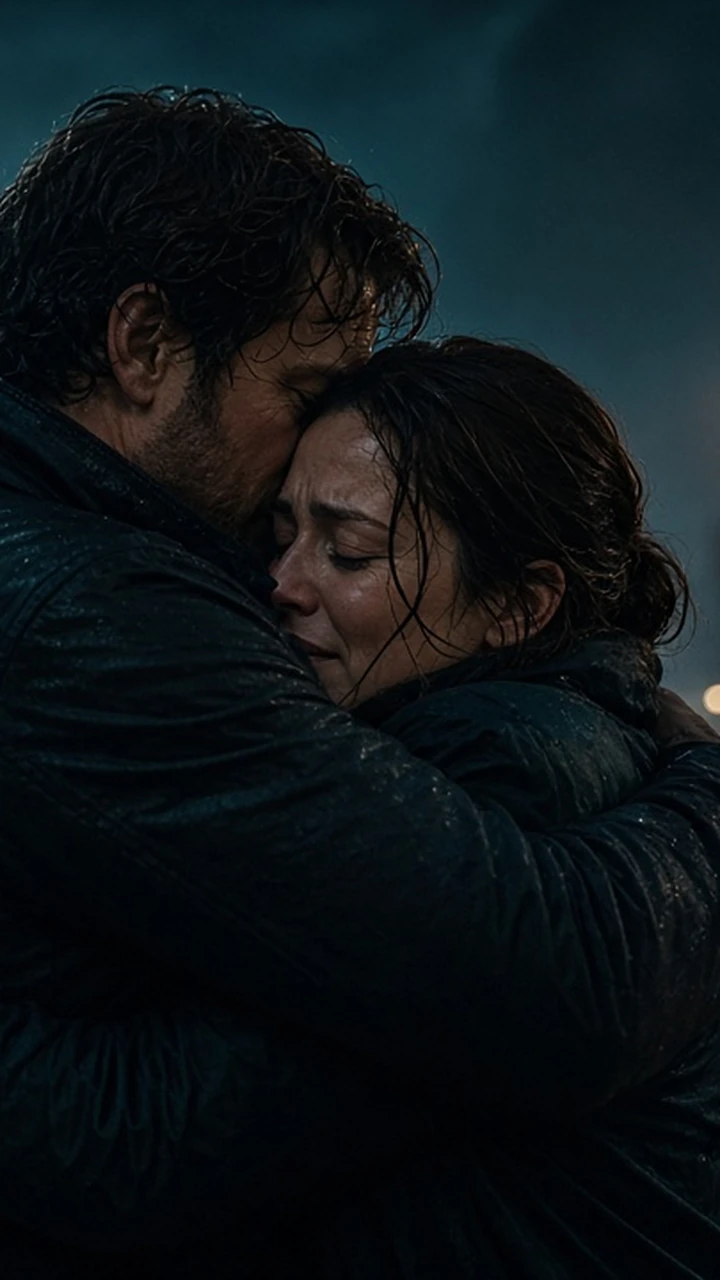
Zombie love story Luma
To make a zombie love story Luma clip, generate matching cold and warm scene stills, animate each beat with Ray3.2 image-to-video in Luma Agents, then edit the ruined world, an unfired gun, a hug, and a warm-memory match cut into one vertical story.
Choose image-to-video before writing the prompt
Four beats: a ruined world, a survivor who refuses to fire, an embrace, and a warm memory of the same couple. Our finished edit is about twelve seconds, vertical 9:16. That is our target, not a Luma preset. Ray3.2 text-to-video and image-to-video run 5 or 10 seconds, then you trim and hard-cut.
People still search “zombie love story Luma Dream Machine.” Dream Machine (2024) evolved into Luma Agents (2026). Luma’s model note says: “Do not use Dream Machine — it is an older deprecated model replaced by Ray.” Existing Dream Machine users can still sign in. New users start with Luma Agents. Use Ray3.2, released June 2026. Make stills with UNI-1 or UNI-1.1. Use the Luma app, the Agents API, or the API platform.
Choose image-to-video once the stills exist. Those modes have no native audio, so add a track only when you have the rights. Resolutions are 360p (draft), 540p, 720p (default), and 1080p. Aspect ratios include 9:16, 3:4, 1:1, 4:3, 16:9, and 21:9. Request 9:16. The video API accepts 1 to 6,000 characters. Modify Video V2, Reframe, and Multi-Keyframe support the edit. They are not a one-click story.
Two portraits name the people, not a start frame. Generate the cold and warm embraces as separate clips. Do not morph one into the other.
Prepare the couple and the matching stills
Use adults who agreed to this fictional treatment. Pick readable eyes, jaw, and hair at a similar camera height. A is the survivor. B is the infected beloved. The photo guide covers the rest. No celebrities, strangers, or minors.
Make four stills in UNI-1 or UNI-1.1 before a Ray3.2 video generation. We did not verify a reference-slot count, so use only a portrait control the app shows. One vertical frame: cold two-shot, refusal, cold embrace, warm embrace. A on the left, B on the right, pale tired skin, no wounds.
Compare the cold and warm embraces before you animate. If a face jumps from the upper third to the center, fix the still. Match the camera distance, then continue a pose the frame already shows.
Map each trend beat to a Luma / Ray3.2 mode or setting
Names, durations, and ratios are from Luma’s Ray page, pricing page, and video-generation guide, fetched 2026-11-06. Timing and acceptance checks are ours, not Luma presets.
| Final edit beat | Suggested Luma / Ray3.2 route | Prompt focus and acceptance check |
|---|---|---|
| 0–3 seconds: ruined world | UNI-1 or UNI-1.1 still, then Ray3.2 image-to-video, 5 seconds, 9:16, 720p default. Draft the motion at 360p first. | One small push forward. Both faces visible. No crowd or new character. Trim the 5-second take to about 3 seconds. |
| 3–5 seconds: refusal | Separate 5-second image-to-video from the refusal still, 9:16. Add an end frame only for a lowered prop in the same world. | A lowers the unfired gun away from B. Reject any discharge or threatening follow-through. Trim to about 2 seconds. |
| 5–9 seconds: embrace | 5-second image-to-video. video.start_frame is the near-contact pose. video.end_frame is the settled hug. Endpoint frames are not supported at 10 seconds. | One short step into contact. End on the chosen shoulder line. Inspect hands and elbows. Trim to about 4 seconds. |
| 9–12 seconds: warm memory | A separate 5-second image-to-video from the warm embrace still, 9:16. Hard-cut in an editor. Do not reuse the cold clip as this start frame. | A quiet hold with gentle breathing. Match faces and silhouette at the cut. No infected-to-healthy morph inside the clip. |
A beat-by-beat shot plan you can actually edit
Beat one is a wasteland road at blue hour. The two adults already face each other. A gutted sedan sits behind A, and an empty horizon behind B. Coat hems move in a light wind. Skip running and a circling camera. Discard a third figure. The clip is 5 seconds and this beat needs about 3, so set an in-point and an out-point.
Beat two is the choice. The prop starts low, away from the camera. Ask for a pause, eye contact, and a lowering hand. Keep the barrel off both faces. If the tool rejects the scene, use an empty hand that relaxes. Do not bypass a safety block. A 10-second take can cover beats one and two, but it cannot use start or end frames.
Beat three closes the distance. Start close enough that one step becomes a hug. B’s hand meets A’s upper back. Faces stay partly visible until contact. On a 5-second job, set the near-contact still as video.start_frame and the settled hug as video.end_frame. Same road, wardrobe, and left-right order. Do not put the warm still in that end frame.
Beat four reads that pose as a memory. Hard-cut to healthy skin and wheat-dusk light. Keep the shoulder line. Generate the hold from the warm still as its own 5-second clip and trim to about three seconds. Do not let the cold clip melt into summer. Align the heads, then the horizon, then the color.
Original prompts for stills and motion
These prompts are ours. Still lines go to UNI-1 or UNI-1.1. Motion lines go to Ray3.2 image-to-video with the matching still as video.start_frame. They are not for our maker, which has no freeform prompt field.
Cold two-shot still: “Vertical 9:16 cinematic still. Survivor on the left in a dark coat, beloved on the right with pale infected skin and familiar eyes, facing each other on an empty wasteland road at blue hour. Both faces readable. Gutted sedan behind the survivor. No wounds, no extra people, no text.”
Refusal still: “Same road. The survivor holds an unfired prop gun low and away from the beloved, barrel at the dirt, eyes locked. No muzzle flash, no injury.” Motion prompt: “Hold the camera. The survivor pauses, meets the other person’s eyes, then slowly lowers the unfired prop. Small coat movement only. No firing, no lunge.”
Cold embrace still: “Same road and wardrobe. The survivor and the beloved in a quiet shoulder-to-shoulder embrace, faces partly visible, hands on upper back. Pale infected skin on the beloved only.” Motion prompt: “From this pose, take one small step into a closer hold. Settle. Gentle breathing. Keep left-right positions. No extra limbs, no face transformation.”
Warm memory still: “The same two adults, now healthy, hold each other at wheat-field dusk. Preserve the head tilt, shoulder line, clothing silhouette, and camera distance of the cold embrace. Warm light, no text.” Motion prompt: “Begin on this warm embrace. Gentle breathing, slight fabric movement. Hold the pose. No new action, no text.”
Start frames, end frames, and multi-keyframes
Ray3.2 image-to-video accepts video.start_frame, video.end_frame, or both, unlike a first-frame-only model. Both pictures belong to one beat. A ruined-road start and a wheat-field end is the morph to avoid. Match camera height, body scale, and who stands on the left.
Start and end frames are not supported at 10 seconds. Leave them off, or use Multi-Keyframe, which supports 10 seconds. The Ray product page allows up to 16 keyframes. The Agents API allows a keyframes list of 1 to 64, with keyframe_indexes. Two or three cold-world keyframes are enough. Keep the warm memory in another generation.
Modify Video V2 at 1080p runs up to 20 seconds at 24 fps, 15 seconds at 30 fps, and 7 seconds at 60 fps. Do not use it to make the beloved healthy. Reframe uses the same aspect ratios; the Ray page FAQ answers disagree on maximum source length (12 seconds in one place, 16 in another), so check the length shown for your job instead of trusting a single number from this guide.
Luma DIY versus the Zombie Love Story maker flow
Zombie Love Story has no partnership with Luma and this maker is not a Luma control panel.
| Decision | DIY with Luma and an editor | Our maker flow |
|---|---|---|
| Inputs | Prepare scene stills in UNI-1 or UNI-1.1 and write shot-specific prompts for Ray3.2 image-to-video. | Two photos as creative reference, with A and B roles; B can be a pet. |
| Story control | You choose poses, a 5-second or 10-second duration, resolution from 360p to 1080p, 9:16, and the final edit. | Four locked beats; choose a world instead of writing a prompt. |
| Match cut | You generate the cold and warm embraces separately and align them in an editor. One Ray3.2 clip should not morph infected skin into the memory. | The designed fourth beat is the warm-memory match cut. |
| Output expectation | Inspect generated takes, then trim 5-second or 10-second clips into the twelve-second story. Native text-to-video and image-to-video have no audio. | Designed SKU: 12 seconds, 9:16, 720p; the preview uses sample stills. |
| Checkout and scale | Plus, Pro, and Ultra are Luma’s own plans. Unused monthly credits expire each cycle under Luma’s billing policy; failed generations return credits. | Checkout is a demo and does not charge. Live paid generation is not connected for mass production. |
Lengths, credits, pricing, and honest limits
Twelve seconds is our edit, not a Ray3.2 length. Use 5-second takes, trimmed to about 3, 2, 4, and 3 seconds, or one 10-second cold take with no start or end frames. Generate the warm memory separately.
Individual plans from the pricing page fetched 2026-11-06: Plus is $30 a month, or $25 a month yearly ($300 a year), with 10,000 credits. Pro is $90 a month, or $75 a month yearly ($900 a year), with 40,000 credits. Ultra is $300 a month, or $250 a month yearly ($3,000 a year), with 150,000 credits. Luma’s billing policy states unused monthly credits expire at the end of the billing cycle and do not roll over, and credits used for failed generations are returned.
Ray3.2 SDR text-to-video and image-to-video totals: 5 seconds is 20 credits at 360p, 50 at 540p, 100 at 720p, and 400 at 1080p. Ten seconds is 60, 150, 300, and 1,200. For jobs that support it, HDR is twice the SDR total and HDR plus EXR is three times — on the Agents API that means 5-second 720p or 1080p only (200 and 800 credits for HDR), because HDR is rejected with 10-second duration and with 360p or 540p. The pricing page notes a +30 credit line for no-keyframes cases. This guide does not quote a UNI-1 or UNI-1.1 still price.
Video takes only: four 5-second 360p drafts are 80 credits; four 5-second 720p keepers are 400; the same keepers at 1080p are 1,600. One 10-second 720p cold take plus two 5-second 720p takes is 500. At 100 credits each, Plus’s 10,000 credits cover 100 of those 720p clips before stills and retries. HDR on a supported 5-second 720p or 1080p take doubles that take’s SDR total; do not apply HDR pricing to 10-second or 360p/540p jobs.
Our maker has no freeform prompt field. The preview shows sample stills. Checkout is a demo and does not charge. Live paid generation is not connected for mass production.
If this workflow is the wrong fit
Compare Midjourney, Hunyuan, HappyHorse, Seedance, Wan, Vidu, Hailuo, PixVerse, Veo, Sora, Kling, Runway, Luma, and Pika through our tool guides. Check each workflow’s documented inputs and limits, or walk /create to inspect our preview. Checkout is a demo and does not charge; live paid generation is not connected for mass production. Compare Grok Imagine in the guide below. Compare Firefly in the guide below. Compare Higgsfield in the guide below. Compare Marey, LTX, Leonardo and Nova Reel in the guides below.
Final review before sharing
- Watch without sound. The viewer should understand recognition, refusal, embrace, and memory from the pictures alone.
- Compare the frame before and after the match cut. Keep the heads and shoulders aligned; remove a distracting flash or unwanted dissolve.
- Inspect the prop, hands, and faces at full size. Reject firing, gore, swapped identities, or a broken embrace rather than hiding the failure under captions.
- Keep captions clear of the faces and label the result as AI-made fiction. Use audio only when you have the rights, and ask the subjects before publishing.
- Save the source stills, chosen takes, and final timeline together so a revised ending does not require rebuilding every beat.
- Zombie love story Marey
- Zombie love story Nova Reel
- Zombie love story Leonardo
- Zombie love story LTX
- Zombie love story Higgsfield
- Zombie love story Firefly
- Zombie love story Grok Imagine
- Zombie love story Midjourney
- Zombie love story Seedance
- Zombie love story HappyHorse
- Zombie love story Hunyuan
- Zombie love story Wan
- Zombie love story Vidu
- Walk the maker
- Zombie love story prompt
- Edit with CapCut
- Plan the match cut
- Choose reference photos
- Zombie love story Runway
- Zombie love story Kling
- Zombie love story Pika
- Zombie love story Sora
- Zombie love story Veo
- Zombie love story Hailuo
- Zombie love story PixVerse
Questions
How do I make the zombie love story trend with Luma?
Prepare matching cold and warm stills, animate each beat with Ray3.2 image-to-video in Luma Agents, then cut the refusal, hug, and warm memory together. Dream Machine is the older model this path replaces.
Are two portraits the same as start and end frames?
No. Portraits identify the people. A start frame opens a shot, and an end frame is the picture that shot should reach. Both should already show the couple in one world.
Does Luma have to generate exactly twelve seconds?
No. Twelve seconds is our edit target. Ray3.2 text-to-video and image-to-video run 5 or 10 seconds. Trim in an editor. Start and end frames are not supported on a 10-second clip.
How many credits does a Luma pass take?
Four 5-second 720p SDR takes are 400 credits before stills, drafts, and retries. On supported 5-second 720p or 1080p jobs, HDR is twice the SDR total. Plus lists 10,000 monthly credits. Luma’s billing policy returns credits for failed generations and does not roll unused monthly credits into the next cycle.
Can I paste these Luma prompts into your maker?
No. Our maker has no freeform prompt field. It uses two photos as creative reference, a world choice, and four locked beats. The preview shows sample stills; checkout is a demo and does not charge.
Is Zombie Love Story affiliated with Luma?
No. This is an independent guide with our own shot plan and prompt examples. The maker is not a Luma integration, and live paid generation is not connected for mass production.
I searched for Luma Dream Machine. Should I use that?
No. Dream Machine is an older deprecated model replaced by Ray. Use Ray3.2 in Luma Agents. Existing users can still sign in. New users start on Agents.